

Biophilic Design Trends 2026 are transforming how boutique resorts and wellness properties connect guests with nature. In 2026, the most successful boutique resorts and wellness properties are not just near nature — they are designed as extensions of it. This is the power of biophilic design, a growing movement that reconnects people with the natural world through architecture, materials, light, and spatial experience.
Biophilic Design Trends 2026 are rapidly becoming essential for creating restorative environments in wellness hospitality. Biophilic design is no longer a niche trend. It has become a core strategy for creating spaces that support mental clarity, emotional well-being, and physical recovery — exactly what today’s discerning guests are seeking.
What is Biophilic Design in Hospitality??
Biophilic design incorporates natural elements, patterns, and systems into the built environment to satisfy our innate human need to connect with nature. In hospitality, this goes far beyond adding a few plants. It involves thoughtful integration of light, views, materials, textures, and spatial flow to create environments that feel alive and restorative.
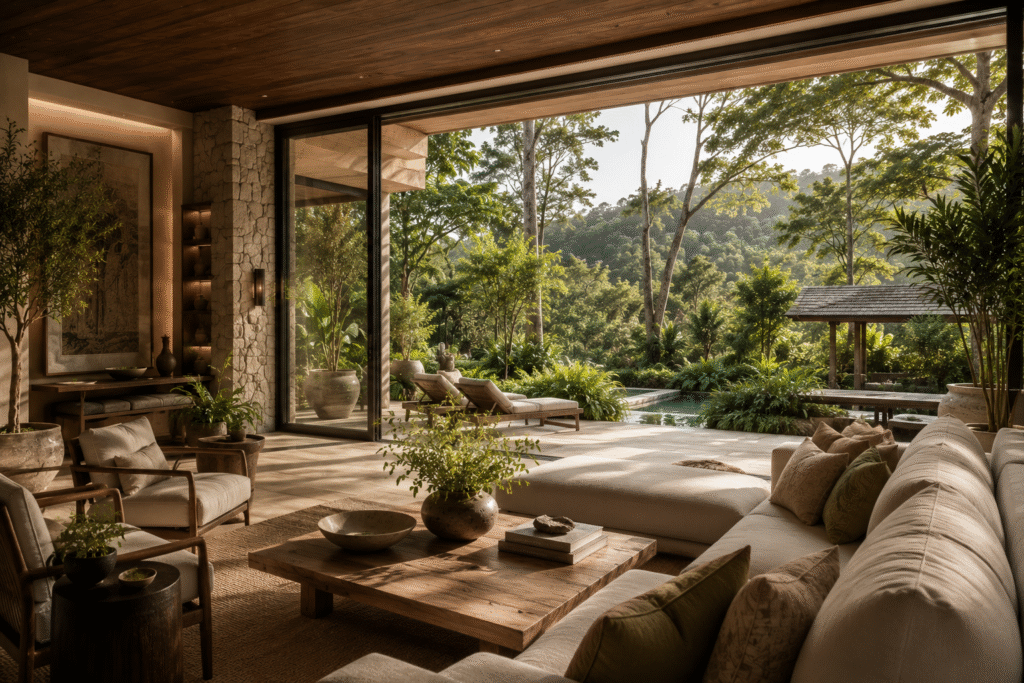
As noted by the International Living Future Institute, biophilic design significantly improves human health and well-being.
Why Biophilic Design Is Transforming Boutique Resorts in 2026
Modern travelers, especially wellness-focused ones, are craving authenticity and deeper restoration. Biophilic design delivers this by reducing stress, improving cognitive function, enhancing mood, and supporting better sleep — all backed by research in environmental psychology and neuroscience.
Properties that embrace strong biophilic principles are seeing:
- Higher guest satisfaction scores
- Longer average stays
- Stronger emotional connection and brand loyalty
- Better differentiation in competitive markets
Read Also: Modern Luxury Interior Design 2026: Creating Timeless Spaces for Wellness Resorts
Key Biophilic Design Trends 2026
1. Seamless Indoor-Outdoor Living
The rise of biophilic design trends 2026: Large retractable glass walls, open-air courtyards, and transitional spaces that blur the boundary between inside and outside are becoming standard in boutique resorts.
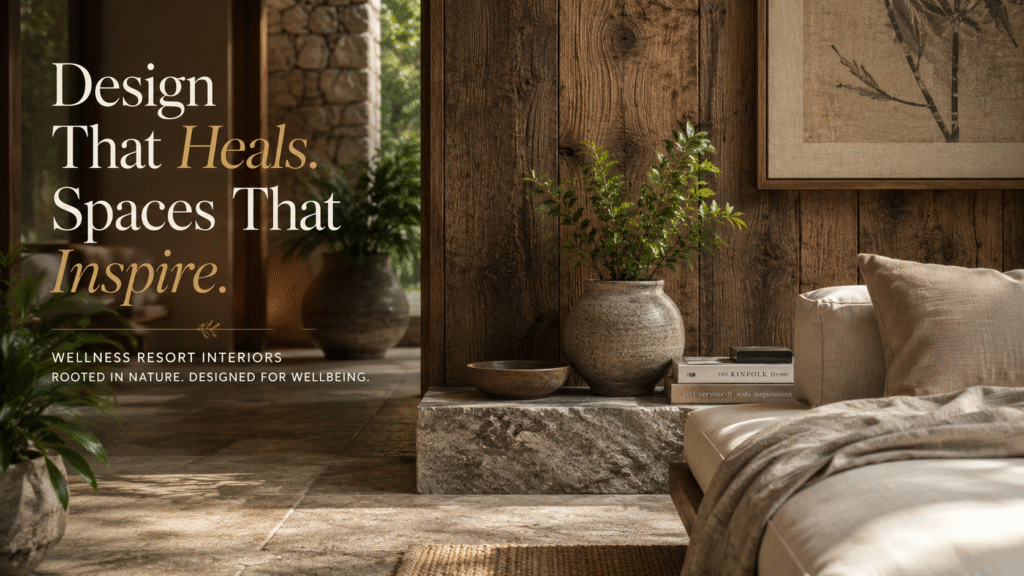
2. Natural Materials & Textures
Reclaimed wood, local stone, handcrafted clay plasters, linen, wool, and rattan create tactile richness that manufactured materials cannot match. These materials age gracefully and tell a story of place.
3. Maximizing Natural Light & Views
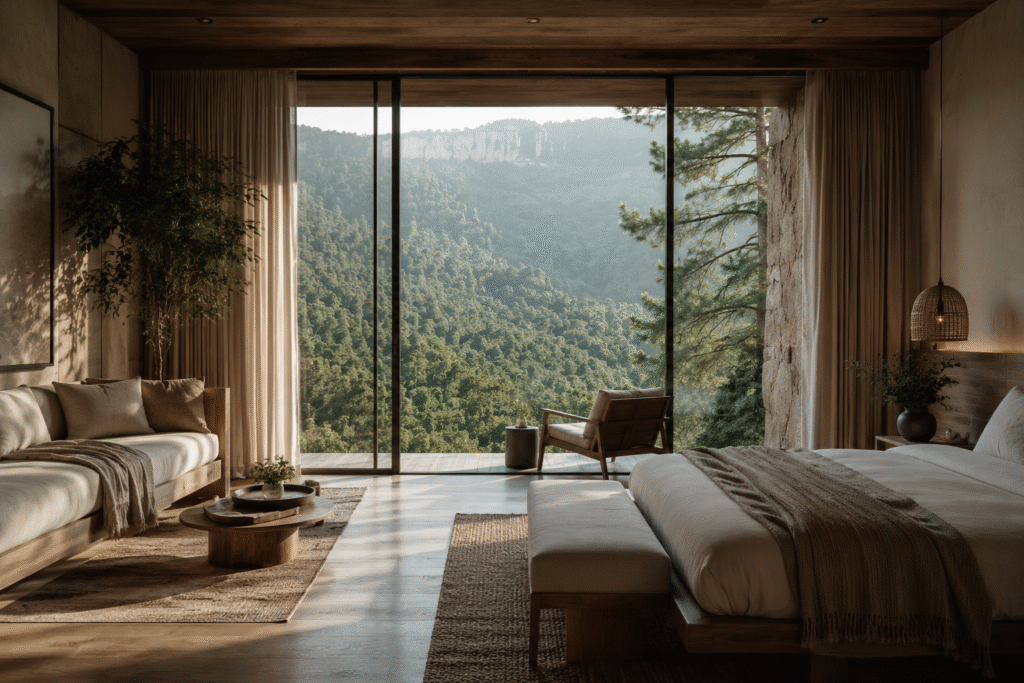
Strategic window placement, skylights, and carefully framed views of nature are prioritized. Many designs use “borrowed landscapes” to make small spaces feel expansive and connected to the environment.
4. Indoor Greenery & Living Walls
Vertical gardens, atrium plantings, and strategically placed specimen trees bring life and improved air quality indoors. In wellness resorts, these elements often double as sensory experiences.
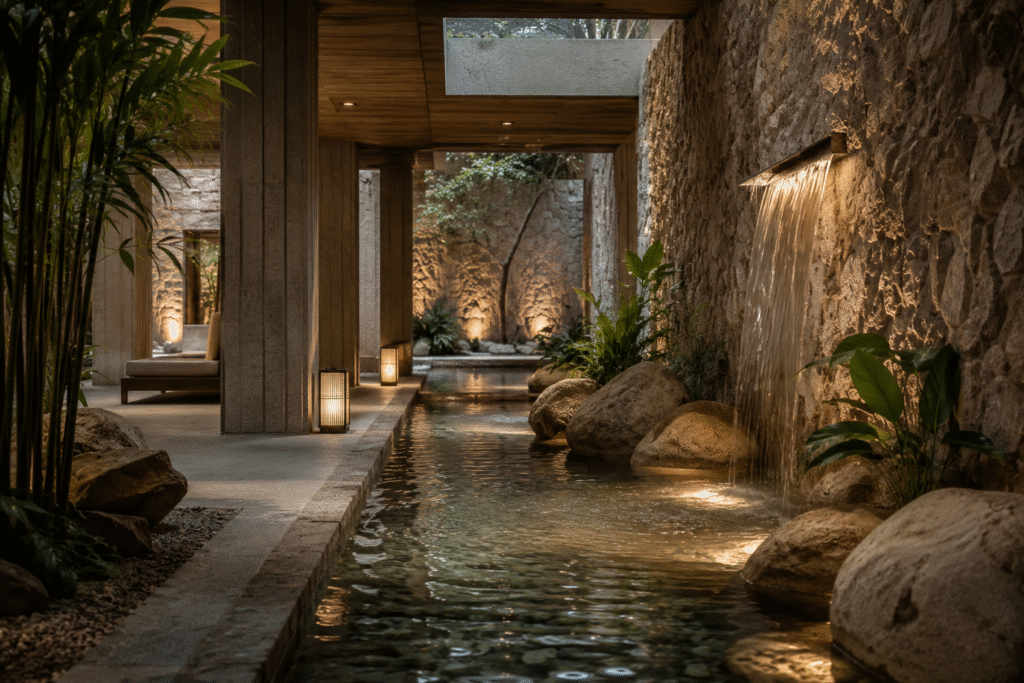
5. Water Features & Natural Soundscapes
The gentle sound of water, whether from fountains, streams, or reflective pools, is used to create calming acoustic environments and mask unwanted noise.
6. Nature-Inspired Patterns & Forms
Designs draw inspiration from fractals, organic curves, and natural geometries found in leaves, shells, and landscapes — creating subconsciously soothing environments.
How Xtord Designs Applies Biophilic Principles?
At Xtord Designs, biophilic design is never an afterthought. We integrate it from the master planning stage through to interior detailing. Our goal is to create resorts that feel like natural extensions of their surroundings while delivering the luxury and comfort guests expect.
We focus on:
- Site-specific design that respects and enhances local ecosystems
- Multi-sensory experiences that engage sight, sound, touch, and smell
- Materials sourced locally or regionally whenever possible
- Flexible spaces that support both solitude and connection
The result is properties that don’t just look beautiful — they genuinely help guests feel better.
The Business Benefits
Properties embracing biophilic design trends in 2026 are seeing higher guest satisfaction. Biophilic design delivers strong returns:
- Guests are willing to pay more for properties that feel deeply restorative
- Stronger emotional connection leads to higher repeat visitation and referrals
- Properties often achieve better operational efficiency through natural ventilation and daylighting
- Enhanced brand storytelling and marketing appeal
Research from Terrapin Bright Green shows strong productivity and recovery benefits from biophilic environments
Final Thoughts
Biophilic design trends 2026 are proving that the most luxurious spaces are those that feel most alive and connected to nature. For boutique resorts and wellness hospitality, this approach creates environments where guests don’t just stay — they heal, reconnect, and remember.
If you’re planning a new project or renovating an existing property and want to harness the power of biophilic design, we would love to help you create something truly special.
Frequently Asked Questions
Q1: What is biophilic design in hospitality?
It is the practice of incorporating natural elements, patterns, and systems into built environments to improve human health and well-being.
Q2: Does biophilic design actually improve guest experience?
Yes. Research shows it reduces stress, improves cognitive function, enhances mood, and supports better sleep.
Q3: Is biophilic design expensive?
It can involve strategic investment, but many elements (natural light, views, local materials) can be cost-effective and deliver strong long-term value.
Q4: Can biophilic design be added to existing resorts?
Absolutely. Many successful renovations focus on improving daylighting, adding greenery, and introducing natural materials and textures.
Q5: How do guests respond to biophilic spaces?
Extremely positively. Many guests mention feeling calmer, sleeping better, and forming stronger emotional connections with the property.
Q6: What are the most important biophilic elements?
Natural light, views of nature, indoor plants, natural materials, water features, and organic forms.
Q7: Is biophilic design only for wellness resorts?
No. It benefits all hospitality segments, especially boutique, luxury, and urban hotels seeking differentiation.
Q8: When should biophilic design be considered?
From the earliest concept and site planning stages for maximum impact and cost efficiency.