

Material selection well-being is one of the most powerful yet overlooked aspects of architecture and interior design. When people walk into a space and immediately feel calm, grounded, or restored, it’s rarely just about the layout or the view. More often, it’s the materials speaking quietly to the senses.
At Xtord Designs, we see this across residential, hospitality, and commercial projects. The materials we choose don’t just define how a space looks — they influence how people feel, recover, and live within it. Understanding material selection well-being helps us create environments that support both health and lasting quality.
How Material Selection Well-being Influences Architecture & Interiors
Understanding material selection well-being helps create healthier spaces. Materials affect us on multiple levels:
- Physical — air quality, temperature regulation, durability
- Sensory — touch, sound, visual texture
- Emotional — the sense of calm, warmth, or connection a space creates
Poor material choices can contribute to discomfort or stress. Thoughtful material selection well-being practices do the opposite — they support recovery, focus, and everyday comfort.
7 Ways Materials Shape Healthier Spaces
1. Indoor Air Quality
Many conventional materials release VOCs that affect air quality. Low-VOC paints, natural plasters, solid wood, and carefully selected adhesives make a measurable difference in how fresh and healthy a space feels.
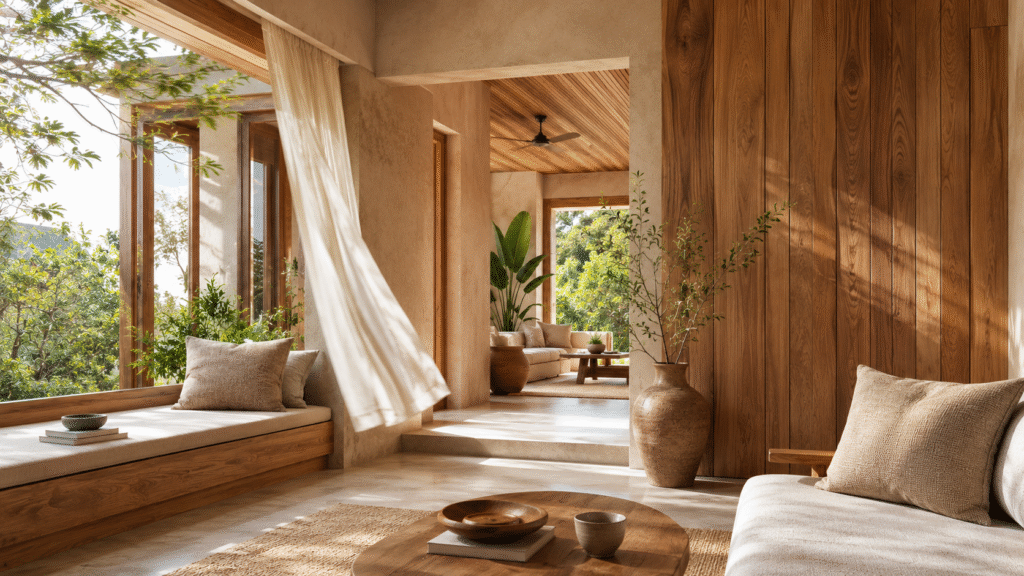
Research from the International Living Future Institute highlights the strong connection between material choices and human health.
2. Thermal & Hygroscopic
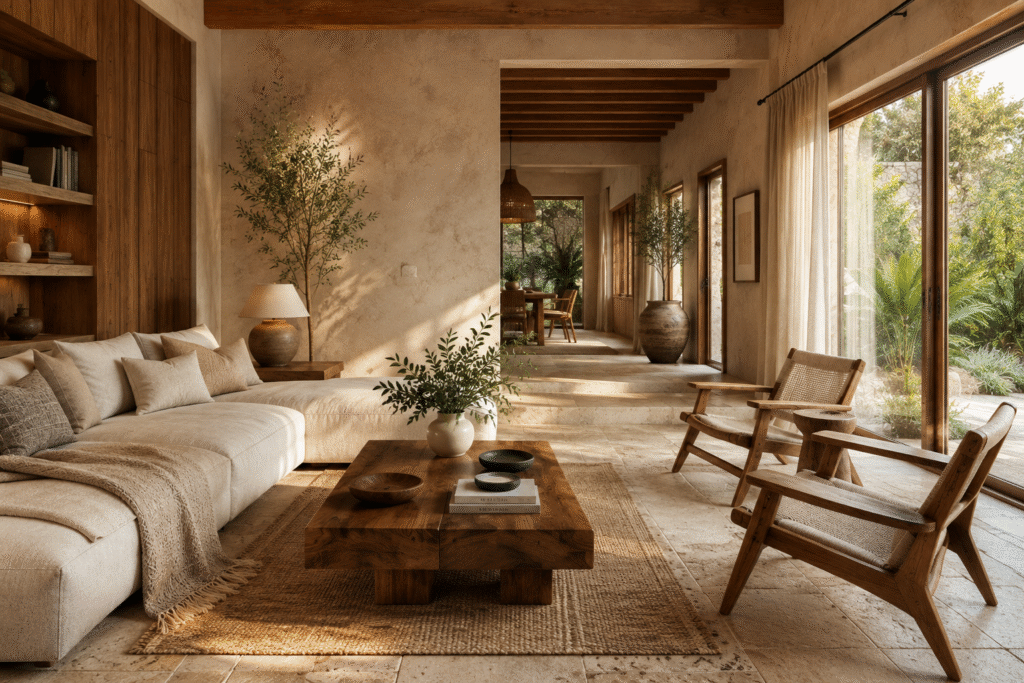
Comfort Materials like stone, clay plaster, and certain woods help regulate temperature and humidity naturally. This creates more stable, comfortable indoor environments.
3. Acoustic Comfort
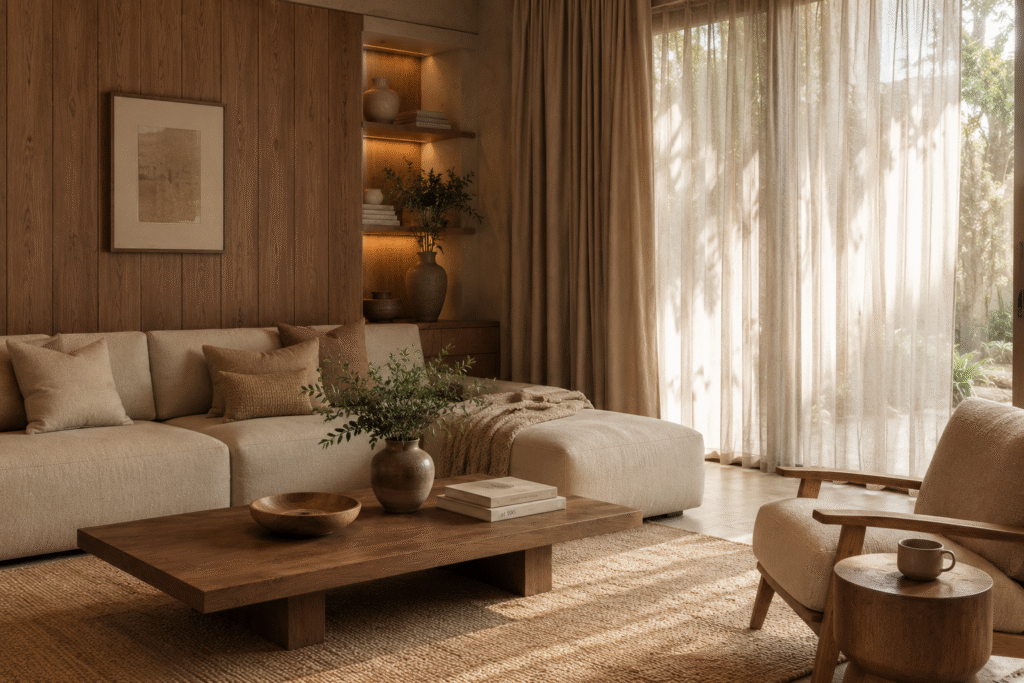
Hard surfaces can create harsh, echoey spaces. Soft natural textiles, wood, cork, and layered materials absorb sound and reduce stress — especially important in homes, offices, and wellness spaces.
4. Tactile Experience
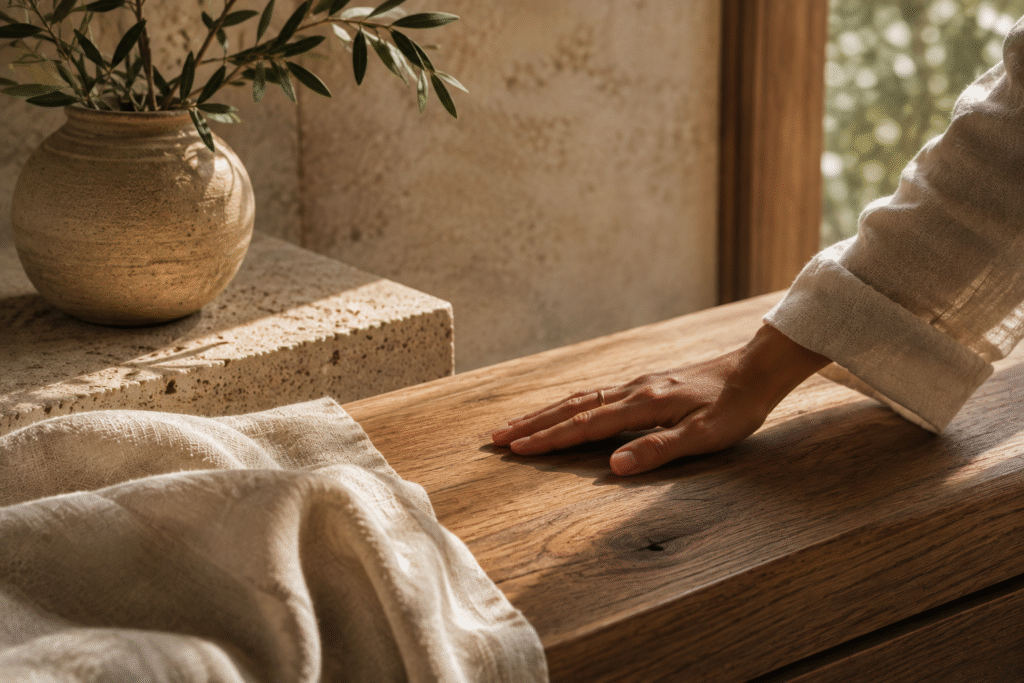
The way a material feels under the hand or foot matters. Smooth stone, warm timber, and natural fabrics invite touch and create a sense of care and quality.
5. Visual Calm & Connection to Nature
Natural materials carry subtle variation and organic patterns that the eye finds restful. This biophilic quality helps reduce mental fatigue and supports emotional well-being.
6. Durability & Long-Term Comfort
Materials that age gracefully reduce the need for frequent replacement and maintain a sense of quality over time. Good material selection considers both immediate comfort and long-term performance.
7. Emotional Resonance
Spaces finished with honest, natural materials often feel more grounded and human. This emotional quality is a core part of material selection and well-being.
Read Also: Smart Guide to Private Villa Ownership in Wellness Resorts 2026: Best Investment & Lifestyle Choice
Practical Material Recommendations
Good material selection well-being improves both comfort and durability
For Floors
- Solid or engineered wood for warmth and comfort
- Natural stone for durability and thermal mass
- Cork or natural linoleum for softness and acoustic benefits
For Walls
- Clay or lime plasters for breathability and soft texture
- Natural wood paneling for warmth
- High-quality, low-VOC paints in calming tones
For Furniture & Details
- Solid wood and natural upholstery fabrics
- Stone or solid surface countertops
- Brass, bronze, or matte black metal finishes that age gracefully
For Wet Areas
- Natural stone or high-quality porcelain
- Solid wood vanities with proper sealing
- Non-toxic sealants and finishes
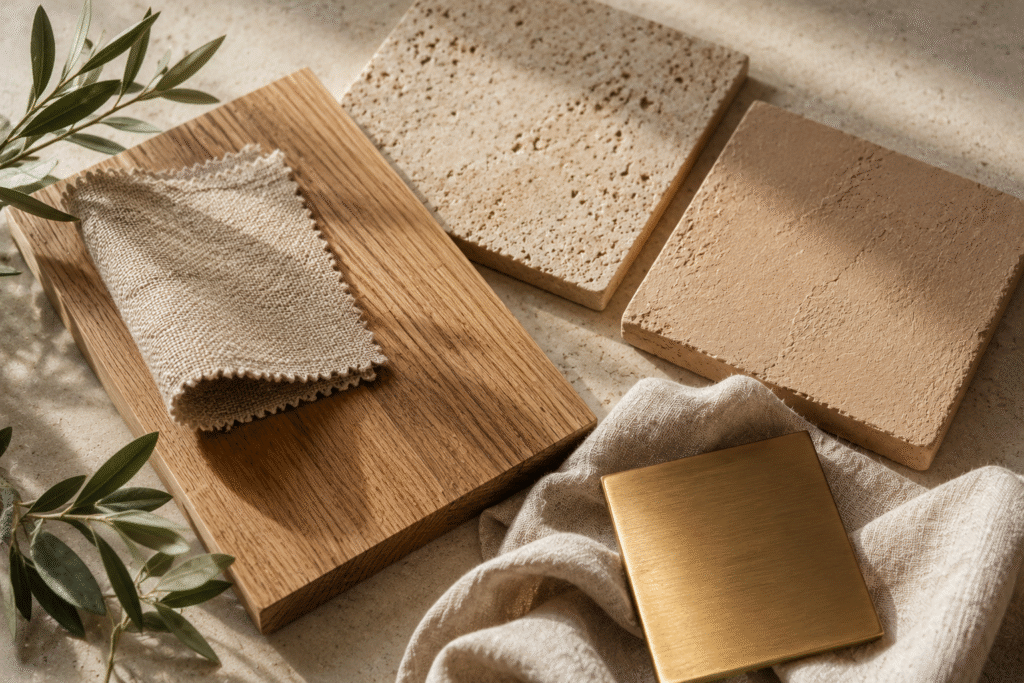
According to insights from Terrapin Bright Green, natural materials and biophilic elements significantly support well-being in the built environment.
Balancing Aesthetics, Performance & Health
The best material decisions sit at the intersection of three things:
- How the material looks and feels
- How it performs over time
- How it affects the people using the space
At Xtord Designs, we prioritise material selection well-being in every project. We evaluate materials not only for beauty and cost, but for their long-term impact on comfort, maintenance, and well-being. This approach applies equally to private residences, boutique hospitality projects, and commercial environments.
Common Mistakes to Avoid
- Choosing materials purely for trend or visual impact
- Overlooking maintenance and durability in high-use areas
- Ignoring how materials interact with light, sound, and climate
- Using synthetic materials that look natural but feel cold or artificial
Final Thoughts
Material selection well-being is one of the most effective tools we have for creating healthier, more comfortable environments. When materials are chosen with care, they don’t just finish a space — they shape how people experience it every day.
As noted by design resources such as ArchDaily, thoughtful material selection is central to creating healthier and more enduring spaces.
Whether we are designing a home, a wellness retreat, or a commercial interior, our goal remains the same: create environments that support well-being through thoughtful, honest, and enduring material choices.
If you’re planning a residential, hospitality, or commercial project and want materials that look beautiful and feel good to live with, we’d be happy to guide the process.
Frequently Asked Questions
Q1: What is material selection well-being?
It refers to choosing materials that support physical health, sensory comfort, and emotional well-being in architecture and interiors.
Q2: How do materials affect indoor air quality?
Many synthetic materials release VOCs. Choosing low-VOC and natural materials significantly improves air quality.
Q3: Are natural materials always better?
Not always, but they often provide superior sensory and long-term comfort when selected and detailed correctly.
Q4: Can material choices impact mental well-being?
Yes. Natural materials and textures have been shown to reduce stress and improve mood.
Q5: What are durable natural materials for high-traffic areas?
Stone, certain hardwoods, and high-quality engineered products perform well when properly specified.
Q6: How important is maintenance in material selection?
Very important. A beautiful material that is difficult to maintain can become a source of frustration.
Q7: Do the same principles apply to homes and hospitality projects?
Yes. The principles of health, comfort, and sensory quality are universal.
Q8: When should material selection begin?
As early as possible, since material decisions influence structure, detailing, budget, and design direction.