

Living in a small house is common now, especially in cities like Gurgaon, Delhi, and Noida. Property prices are increasing, apartments are getting compact, and people are trying to fit more things into smaller spaces. But honestly, a small house is not the real problem. Bad Space Planning and Small House Interior Design.
Many homes feel crowded, not because they are tiny, but because the interiors are not designed properly. Wrong furniture, dark colours, poor lighting, unnecessary decoration, and blocked movement can make even a decent-sized room feel uncomfortable.
Good interior design is not about filling every corner. It’s about creating breathing space.
Read Also: Top Interior Designers in Delhi NCR for Small Apartment Design
Here are some practical and realistic small house interior ideas that genuinely help spaces feel bigger without making the home Interior Design look artificial.
1. Stop Buying Oversized Furniture for House Interior Design
This is one of the biggest mistakes people make. Large sofas, bulky beds, heavy dining tables, and oversized TV units consume visual space very quickly.
In Indian homes, people often buy furniture thinking:
“Bada furniture zyada premium lagta hai.”
But in compact homes, it creates the opposite effect. Smaller and cleaner furniture designs usually work much better. Furniture with slim legs and open bottoms also creates a lighter feeling because more floor area remains visible.
A room feels bigger when movement feels easier.
2. Use Light Colours, But Don’t Make the House Lifeless
White walls alone don’t magically make a house spacious.
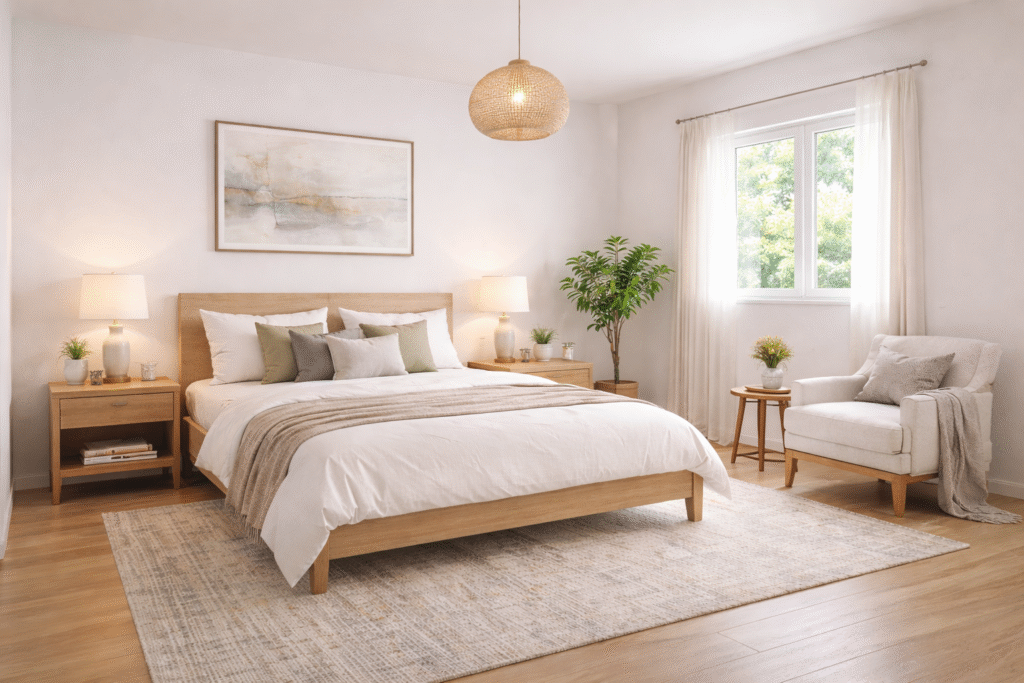
Many small homes become dull because everything is made plain white without warmth.
Instead, use soft neutral shades like:
- Warm beige
- Off-white
- Light grey
- Sand tones
- Pale earthy colours
These colours reflect more light and create openness without making the home feel cold.
At XTORD Designs, we usually notice that balanced colours matter more than trendy colours.
A comfortable home always feels bigger emotionally too.
3. Natural Light Changes Everything
A dark room automatically feels smaller.
Even a beautiful interior starts looking cramped if sunlight cannot enter properly.
Try keeping windows less blocked during daytime. Heavy curtains often reduce openness inside compact homes.
Simple tricks that help:
- Sheer curtains
- Mirrors opposite windows
- Glass partitions
- Light-coloured flooring
Natural light creates visual depth that artificial lights cannot fully replace.
4. Too Much Decoration Creates Visual Noise
This is becoming common because of social media trends.
People try copying luxury interiors from Instagram and end up overcrowding small homes.
Too many:
- Wall items
- Showpieces
- Frames
- Textures
- Decorative lights
…can make a room feel mentally exhausting.
Small homes need cleaner visual balance.
One good painting looks better than ten random decorative items.
Empty space is also part of design.
5. Storage Should Stay Hidden Whenever Possible
Visible clutter instantly makes rooms look smaller.
Open storage works in magazines, but daily Indian life is different. Families usually have extra items, seasonal storage, bags, boxes, clothes, utensils, and household essentials.
That’s why smart hidden storage works better in compact homes.
Useful ideas:
- Storage beds
- Wall-mounted cabinets
- Under-stair storage
- Foldable furniture
- Built-in wardrobes
The less visible mess there is, the larger the room feels.
6. Mirrors Actually Work – But Placement Matters
People often use mirrors only for decoration.
But mirrors can genuinely improve space perception if placed correctly.
Best placements:
- Opposite windows
- Near dining areas
- Narrow corridors
- Small living rooms
Mirrors reflect both light and depth.
But too many mirrors can also feel uncomfortable, so balance matters.
7. Open Floor Space Feels More Relaxing
Many homeowners try to utilize every corner.
But sometimes leaving some floor space empty creates a more premium and breathable environment.
A room doesn’t need to be fully occupied to look complete.
This is something many experienced designers understand after years of working on real homes – comfort comes from flow, not from filling space.
As an interior design company in Gurgaon, we often see that homes with simpler layouts feel more welcoming than overdesigned spaces.
8. Multi-Use Furniture Makes Daily Life Easier
In small houses, one furniture item serving multiple purposes makes a huge difference.
Examples:
- Sofa-cum-beds
- Foldable study tables
- Storage ottomans
- Extendable dining tables
These ideas are practical for Indian families because they improve usability without creating crowding.
Design should support daily life, not complicate it.
9. Ceiling Design Should Stay Simple in Small Homes
Heavy false ceilings reduce vertical openness.
In compact spaces, simpler ceiling designs usually work better because they keep the room visually taller.
Too many ceiling layers, dark colours, or excessive lighting patterns can make rooms feel compressed.
Subtle lighting with clean ceiling lines creates a calmer atmosphere.
10. Every Room Doesn’t Need a Theme
Modern interiors sometimes become too concept-heavy.
One room becomes “luxury.”
Another becomes “industrial.”
Another becomes “royal.”
This usually breaks visual continuity.
Smaller homes feel larger when design language stays connected throughout the house.
Simple consistency helps spaces flow naturally.
Why Emotional Comfort Matters in Interior Design
This part is often ignored. A home may look stylish online but still feel uncomfortable in real life.
Good interiors should reduce stress, improve movement, support routines, and make daily living easier.
At XTORD Designs, we believe homes should feel personal, calm, and functional – not just visually impressive.
Since 2004, working across homes, offices, and commercial interiors in Delhi NCR has shown us that practical design always lasts longer than trends.
And honestly, that matters more.
Final Thoughts
Small homes are not a limitation anymore. With thoughtful planning, proper lighting, balanced colours, and smart furniture choices, compact spaces can feel surprisingly open and comfortable.
The goal of interior design is not to make a house look expensive.
The real goal is to make people feel relaxed inside it.
Sometimes a simpler room with good space planning feels far better than a large house filled with unnecessary things. And in today’s fast city life, that feeling of calm matters a lot.
FAQs
1. Which colour makes a small room look bigger?
Light neutral colours like off-white, beige, and soft grey usually make rooms feel more spacious.
2. Is minimal interior design good for small houses?
Yes, simple and clutter-free interiors help small homes feel cleaner, calmer, and visually larger.
3. How can natural light improve small interiors?
Natural light increases brightness and depth, which helps compact spaces feel more open.
4. What type of furniture works best in small homes?
Compact, lightweight, and multi-purpose furniture works best for smaller spaces.
5. Why do some small homes feel crowded even after renovation?
Poor space planning, oversized furniture, and too much decoration often make homes feel congested.