

The decision on the Best Color Combinations Idea used in Indian houses has been taken as a matter of style. It is in actual fact, a life choice.
A colour accompanies you on a daily basis. It influences the feeling of the hotness of a room, cleanliness, serenity of the mind, and ease of every-day existence. Most Indian houses are having a problem with colours not due to the wrong colours being used but rather the wrong choice of colours without knowing how Indian rooms are used.
Having worked more than two decades in the sphere of designing spaces in Delhi NCR, there is one fact to be mentioned:
Good colour combinations are practical in the first place before being attractive.
Indian Rooms Do Things the Indian Way.
In Indian houses, the situation is much different and can be overlooked when picking the colour.
It has had a lot of sunshine for several months. Almost all year round it has dust. Most of the time rooms have multiple purposes. A dining place can also be a living room. A bedroom can be used as a work space. These realities impose the need of colours that can adjust, but not to prevail.
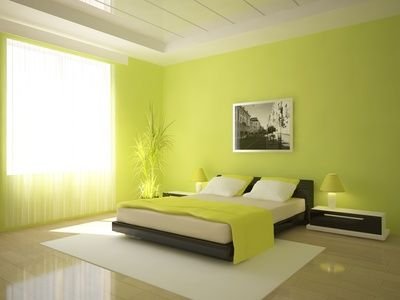
What is a beautiful colour on a sample card can be heavy or exhausting when it is applied on all four walls. This is the reason why moderation is more important than daring.
Colours that Stand the Test of Time in the Living Room.
An Indian home has the living room interior design as the most frequented area. It is visited, chatted with, guests, and everyday family life. Colours there must not be demanding on the part of each minute.
Neutral tones that are combined with a single calm tone are effective. Colours such as soft beige, off-white, grey or light earthy colours, remain comfortable in the long run. They are light reflecting and do not exhibit dust easily.
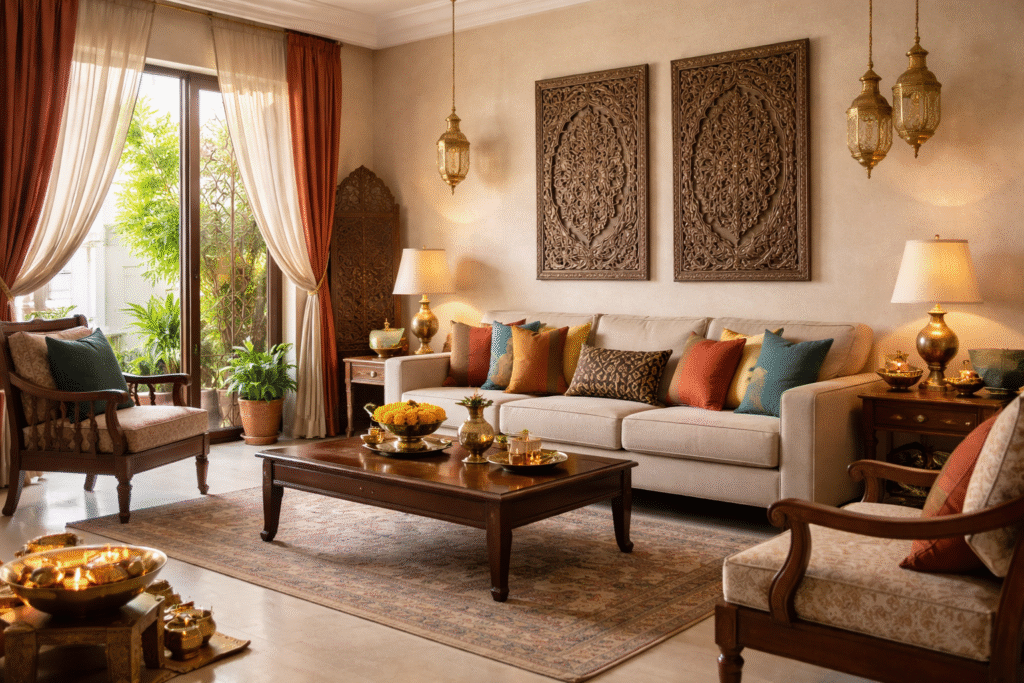
Dark or bright colours are very impressive at the beginning and usually last a few months and begin to be tiresome. Such colours also have the effect of making the space in a smaller home in the Delhi NCR seem even smaller.
The colour used in a living room must not be aggressive towards the room, it should be in harmony with it.
The Colours in the Bedroom Must Soothe the Body.
Bedrooms are not selected rationalistically. Individuals opt to use deep colours because they believe they will be able to feel cosy. What transpires is restlessness.
Bedrooms must have colours that can make the mind go slow. The soft blues, warm off-whites, light earthy browns, soft greens and light peach colors are effective since they minimize the visual noise. Such shades do not compete with the artificial lighting during the night or the bright daylight during the morning.
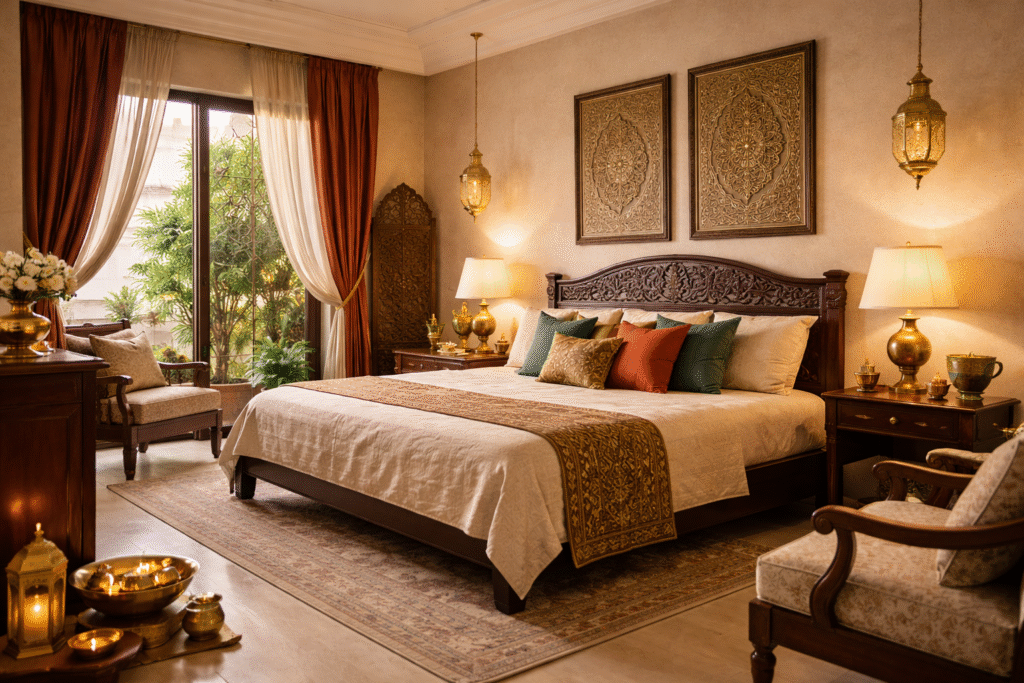
Walls that have high contrast or glossy finishes are more disturbing to rest than individuals may think. Lighter and warmer colors enable the room to be relaxed, even when days have been long.
Kitchen Colours Should Not Abuse Everyday Cooking.
Indian kitchens work hard. Some of the things that make up ordinary life include oil, steam, heat and frequent wash. Colour, in this instance, should be realistic.
Dark colours are very dark and reveal the oil marks. Pure white is a quick staining color. Light colours like warm whites, light greys, soft greens or beige colours are more effective in the long run. They ensure that the kitchen is kept clean without requiring one to work all the time.
Simple and light colour combinations in kitchens will stay longer in terms of visual freshness in the homes in Gurgaon compared to the homes with heavy design trends.
Colours in the dining area affect comfort.
Restaurants are not about theatrics but coziness. The cold or extremely dull colours tend to decrease comfort in the meal.
The relaxed dining is supported by soft warm tones, creams, light brown, mustard, or earthy tones. These colours render the space more grounded and approachable, particularly to the families who can have meals together on a daily basis.
Indian dining is not rushed. Colours in this case must aid in chatting and relaxation.
Bathrooms Need Calm, Not Fashion
Bathrooms are usually overdone in fancy colors that do not last long.
The combinations of soft grey and white, warm beige and stone, or light blue and neutral are the best choices. These colours can absorb moisture and remain clean to the eyes.
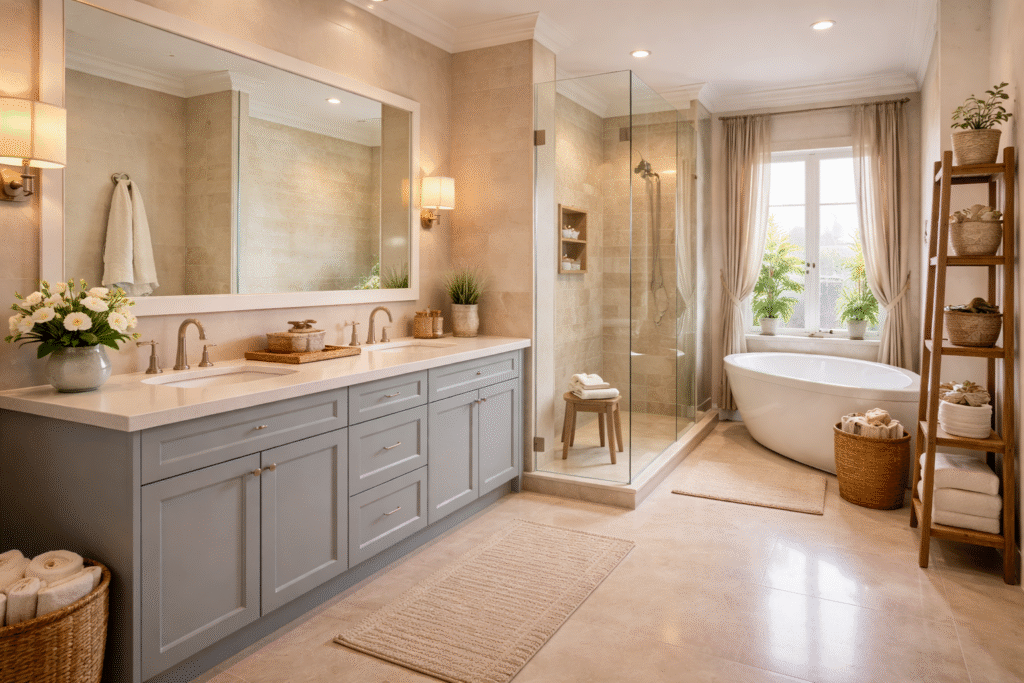
Bathrooms are practical areas initially. Cool colours help eliminate the clutter of the visuals as well as simplifying the maintenance.
Colour Mistakes Seen Again and Again
Some of these errors seem to make a recurrence after years of interior design in Delhi NCR. The choice of colours is not checked against natural light. There are accent walls which are unnecessary. Entire houses are painted in tones that are dark since it looked good in a picture.
The biggest error is to select colour without having Best Color Combinations Idea on how the room is to be occupied.
Life should precede colour and not trends.
The importance of experience in Colour Choosing.
The choice of colour is not about being familiar with shades. It is about knowing behaviour, how people move, sit, sleep, cook, and relax.
A seasoned interior designer in the area of Delhi NCR would know how the colours will vary with pollution and dust as well as with heavy sunlight. It is not knowledge stored in catalogues. It is a result of watching spaces growing older.
Coupley fine combinations of colour are not screaming. They last quietly.
Final Thoughts
Indian rooms are not the places where the boldest or newest colour combinations should be used. It is they that are right even after many years.
- Every visitor is not impressed by a good home.
- It helps the people who daily live in it.
- This is what the careful use of colour can do.
Frequently Asked Questions (FAQs)
1.Which colors would be best used in Indian homes in general?
Light, warm, and balanced colors are the most appropriate because of dust, sunshine and being used on a daily basis.
2.Are dark colors entirely inappropriate to Indian rooms?
No, they should have enough space, light, and a good location.
3.Is it recommended that each room should be of different colour?
Yes. Every room has its purpose and must have an appropriate mood.
4.The use of natural light as a factor in colour choice?
Very important. Light direction and intensity vary greatly in terms of changing colours.
5.Why do there always seem to be homes that require to be repainted?
In most cases, light and maintenance were not considered and usage of colours was based on the choice of colours.